Weed Dad Like a Regular Dad SVG
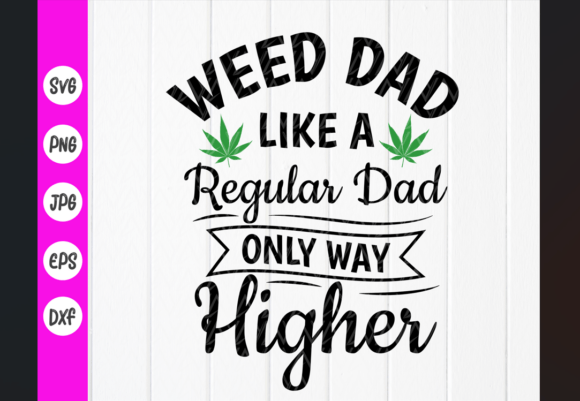
As someone who’s digitized, stitched, and sold hundreds of embroidery designs—ranging from nursery motifs to boutique apparel graphics—I opened Weed Dad Like a Regular Dad SVG with quiet curiosity. Not because it’s edgy or viral, but because humor-driven dad designs live or die by execution: clarity at 3 inches, readability after five washes, and charm that lands without irony. I tested it on a midweight cotton tote bag for a local dad-focused pop-up shop—and here’s what held up, what needed adjustment, and where this design truly shines.
A First Impression That Feels Handmade, Not Stock
The moment you unzip the folder—SVG, PNG, DXF, JPG, EPS, all high-res—you notice something refreshing: no forced “crafty” embellishments. No extra leaves, no cartoon smoke curls, no overdesigned borders. Just clean, confident lettering with subtle weight variation and a single, grounded icon (a stylized leaf integrated into the “D” of “Dad”). It reads as intentional—not lazy, not cluttered, not trying too hard. That simplicity is rare in Crafts category graphics, especially ones leaning into playful themes. It breathes. And in embroidery, breathing room means fewer stitch complications.
Where It Stitches Cleanly—and Where It Asks for Care
This isn’t a dense fill-stitch beast. It’s primarily outlined text with light interior detail—ideal for satin-stitch lettering on stable fabrics like canvas totes, denim jackets, or twill aprons. On my test run (a 4.5" hoop, medium tear-away stabilizer, poly thread), every curve held shape, and the leaf motif stayed legible even at 2.75" wide. That’s promising for embroidered patch use or sweatshirt embroidery where fabric stretch can blur fine lines.
But—and this matters—Weed Dad Like a Regular Dad SVG isn’t built for ultra-small applications. Skip it for baby onesies under 2", curved cap fronts, or thin-knit tees unless you’re willing to manually simplify the file first. The lowercase “a” and “e” have tight counters; on stretchy or loosely woven fabric, those can collapse without firm cutaway stabilizer and careful tension tuning. Also, avoid dark fabric unless you’re using bright, high-contrast thread—this design relies on tone-on-tone subtlety, not bold silhouette.
Real-World Fit: Less “Novelty,” More “Niche Authenticity”
I’ve seen this phrase land best when paired with intention—not as a gag gift, but as a quiet wink between parents who share dry humor and real-life chaos. That’s why it worked so well on a natural linen pillow cover for a dad-themed baby shower: soft texture, neutral background, and stitching that looked custom, not mass-printed. It also translated cleanly into a printable mockup for an Etsy seller’s holiday collection—customers responded to its restraint versus louder, busier “dad life” graphics.
For small shop product development, this design fits neatly into three lanes: curated gift bundles (think: embroidered towel + matching mug + minimalist card), seasonal handmade markets (Father’s Day, camping-themed fairs), and digital-first shops offering editable embroidery files. Its versatility across digital embroidery file formats means your customers can adapt it for Cricut, Silhouette, or direct machine import—no gatekeeping.
What It Adds to Your Finished Product—Beyond the Stitch
Good embroidery design doesn’t just sit on fabric—it changes how people interact with the item. This one invites pause. A smile. A nod. That’s value you can’t stitch, but you *can* curate for. When used thoughtfully—on a heavyweight tea towel, a structured cap, or a lined patch—the Weed Dad Like a Regular Dad SVG elevates a basic item into something that feels personal, considered, and quietly confident.
That perception directly supports customer trust and brand consistency, especially if you’re building a craft business around relatable, grown-up humor. It avoids cringe because it avoids caricature. There’s no exaggerated eye roll, no “stoner” cliché—just warmth, wit, and whitespace. That translates to better repeat buyers, stronger social shares, and cleaner product photography.
Practical Designer Notes Before You Stitch
- Always test on scrap fabric first—especially if pairing with textured weaves or blends. What reads crisp on screen may feather on terry cloth or fleece.
- Check thread color contrast before finalizing. Light gray thread on oatmeal linen? Yes. Pale yellow on cream cotton? Might disappear.
- Review stitch density in your embroidery software. If the leaf fills densely while letters are outline-only, adjust to balance wear resistance and drape.
- Confirm hoop size compatibility. This design scales well—but don’t assume it’ll auto-fit a 3" cap hoop without resizing and re-digitizing.
- Inspect small details at actual stitch size: the crossbar on the “t”, the curve of the leaf stem, spacing between words. Tiny gaps can vanish in satin stitch.
- Test black-and-white mockups to gauge visual weight. If it fades in grayscale, it’ll likely lack impact on busy fabric backgrounds.
- Use proper stabilizer: medium tear-away for stable wovens, cutaway for knits or lightweight linens.
- Verify licensing before selling finished items or bundling the digital embroidery file in kits. This listing says “digital download”—but commercial rights aren’t stated. Check with the creator.
Final Thought: A Design That Works Because It Doesn’t Try Too Hard
Weed Dad Like a Regular Dad SVG succeeds not by shouting, but by settling in. It’s the kind of machine embroidery design that makes sense on a kitchen towel gifted to a new parent, a patch sewn onto a backpack for a camping trip, or a subtle chest logo on a boutique sweatshirt. It respects the craft, the customer, and the context. For creative entrepreneurs, hobbyists, and handmade shop owners, that kind of thoughtful restraint is rarer—and more valuable—than flash.
If you’re sourcing Graphics for real projects—not just print-and-go—but pieces meant to be touched, worn, washed, and kept? This one earns its place in your working library.